

What Is an LCD Video Wall and How Does It Work?
An LCD video wall represents a sophisticated display solution comprising multiple liquid crystal display panels arranged in a matrix configuration to create one large, cohesive visual canvas. These professional-grade display systems utilize thin-film transistor technology to produce high-resolution images across seamless arrays, making them essential for control rooms, corporate lobbies, retail environments, and broadcast studios. The global video wall market was valued at approximately USD 10.23 billion in 2024 and is projected to reach USD 11.71 billion in 2025, demonstrating significant industry adoption and continued technological advancement.
The fundamental operation of an LCD video wall involves synchronizing multiple display panels through specialized processing hardware that distributes content across the entire array. Each individual panel functions as a tile within the larger display matrix, with advanced calibration ensuring uniform brightness, color accuracy, and seamless visual continuity between adjacent screens.
How to Select the Right Commercial LCD Video Wall Display for Your Application?
Selecting the appropriate commercial LCD video wall display requires careful evaluation of several critical specifications. Professional installations demand displays engineered specifically for continuous operation, distinguishing them significantly from consumer-grade televisions.
Industry standards recommend brightness levels ranging from 500 to 700 nits, with higher luminance values proving essential for environments with substantial ambient lighting. Premium LCD video wall displays achieve brightness levels as high as 700 nits with Full HD resolution, ensuring optimal visibility across diverse installation scenarios.
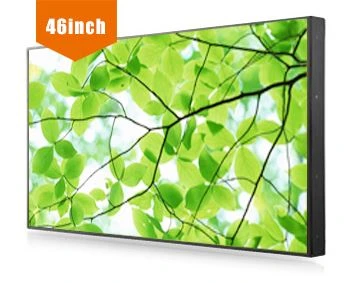
Bezel width constitutes another crucial specification affecting visual continuity. Modern ultra-narrow bezel designs measure less than one millimeter, with some professional models featuring 0.44mm bezels, creating virtually imperceptible seams between adjacent panels. This narrow bezel architecture minimizes visual interruption and maintains content integrity across the entire display surface.
Key Technical Specifications Comparison
|
Specification Category |
Standard Range |
Premium Range |
Application Consideration |
|
Brightness (cd/m²) |
500 nits |
700 nits |
High ambient light environments require 700 nits |
|
Bezel Width |
3.5mm |
0.44-1.8mm |
Control rooms and fine detail applications need ultra-narrow |
|
Resolution per Panel |
1920x1080 (FHD) |
3840x2160 (UHD) |
Viewing distance determines optimal resolution |
|
Viewing Angle |
178° horizontal/vertical |
178° horizontal/vertical |
Wide viewing angles essential for large venues |
|
Panel Lifespan |
50,000 hours |
60,000+ hours |
24/7 operation requires industrial-grade panels |
What Are the Installation Requirements for LCD Video Wall Systems?
Professional installation of an LCD video wall system demands comprehensive planning encompassing structural support, thermal management, and content distribution infrastructure. The physical installation requires robust mounting systems capable of supporting significant cumulative weight, as each 55-inch panel typically weighs approximately 28 kilograms, necessitating reinforced wall structures or specialized floor-standing frameworks.
Thermal considerations prove equally critical, as densely packed display arrays generate substantial heat during continuous operation. Adequate ventilation systems must maintain ambient temperatures within manufacturer specifications, typically ranging from 0 to 40 degrees Celsius for optimal panel longevity. Many professional installations incorporate dedicated HVAC systems or active cooling solutions to prevent thermal degradation and ensure consistent performance.
The content distribution network requires specialized video wall processors or controllers capable of managing multiple input sources and distributing content across the entire display matrix. These processors handle resolution scaling, bezel compensation, and synchronization to maintain perfect timing across all panels. Network infrastructure must support sufficient bandwidth for high-resolution content delivery, particularly when implementing 4K or higher resolution configurations.
How Does an Ultra-Narrow Bezel LCD Video Wall Improve Visual Performance?
Ultra-narrow bezel LCD video wall configurations deliver superior visual performance by minimizing the physical gaps between adjacent display panels. Traditional displays feature bezels ranging from 5mm to 10mm per side, creating noticeable dark lines that fragment visual content and reduce immersion. In contrast, ultra-narrow bezel designs reduce these interruptions to less than 1mm per side, resulting in cumulative gaps of less than 2mm between panels.
This bezel reduction technology significantly enhances content presentation quality, particularly for applications displaying detailed imagery, data visualization, or immersive video content. Geographic information systems, network operation centers, and security monitoring facilities benefit substantially from minimized bezels, as critical information remains unobstructed across panel boundaries. The reduced visual interruption maintains contextual relationships within displayed data and prevents loss of crucial details at panel intersections.
Advanced calibration technologies further enhance ultra-narrow bezel LCD video wall performance by ensuring uniform luminance and color characteristics across the entire display surface. Factory calibration processes establish consistent white points, gamma curves, and color reproduction across all panels, eliminating visible discrepancies that could otherwise compromise visual continuity.

LCD Video Wall vs LED Display Technology
|
Feature |
LCD Video Wall |
LED Video Wall |
Optimal Application |
|
Pixel Pitch |
Fixed by panel resolution |
Configurable (0.9mm-10mm+) |
LCD for close viewing, LED for distance |
|
Brightness |
500-700 nits |
600-6000+ nits |
LED superior for outdoor or bright environments |
|
Bezel Presence |
Yes (0.44mm-3.5mm) |
Seamless |
LED provides true seamless experience |
|
Initial Investment |
Moderate |
High (especially fine pitch) |
LCD more cost-effective for indoor applications |
|
Maintenance |
Panel replacement required |
Individual LED module service |
LED offers easier serviceability |
|
Power Consumption |
Lower per square meter |
Higher per square meter |
LCD more energy efficient |
What Factors Determine Large Format LCD Video Wall Cost and ROI?
Investment analysis for large format LCD video wall installations encompasses multiple cost components extending beyond initial hardware acquisition. The total cost of ownership includes display panels, mounting infrastructure, video processing equipment, installation labor, calibration services, and ongoing maintenance expenses. Panel costs vary substantially based on specifications, with ultra-narrow bezel configurations commanding premium pricing compared to standard bezel models.
The interactive video wall market reached USD 18.33 billion in 2024 and projects growth at a 14.0% compound annual growth rate through 2030, indicating robust market expansion and increasing accessibility of advanced display technologies. This market growth correlates with declining hardware costs and expanding application scenarios, improving return on investment calculations for commercial implementations.
Operational considerations significantly impact long-term cost effectiveness. Professional-grade panels engineered for continuous operation deliver 50,000 to 60,000 hours of service life, translating to approximately five to seven years of 24/7 operation before requiring replacement. Energy efficiency also affects operational costs, with modern LED-backlit LCD panels consuming substantially less power than legacy technologies while delivering superior brightness and color performance.
Return on investment calculations must account for the business value generated through enhanced communication effectiveness, improved brand presentation, and operational efficiency gains. Retail environments utilizing LCD video wall technology report increased customer engagement and dwell time, while corporate installations enhance meeting productivity and collaborative decision-making capabilities. Control room operators benefit from improved situational awareness and faster response times when monitoring complex systems across large-scale display arrays.

Maintenance and Operational Considerations
|
Maintenance Task |
Frequency |
Estimated Cost |
Impact on Performance |
|
Panel cleaning |
Monthly |
Minimal (labor) |
Maintains brightness and clarity |
|
Calibration verification |
Quarterly |
Moderate (specialist service) |
Ensures color uniformity |
|
Firmware updates |
Semi-annually |
Minimal |
Improves functionality and stability |
|
Panel replacement |
5-7 years |
High (hardware cost) |
Restores original performance |
|
Video processor maintenance |
Annually |
Moderate |
Prevents content distribution failures |
Professional installations incorporate redundancy measures and preventive maintenance protocols to minimize downtime and ensure continuous operation. Hot-swappable components, backup processors, and modular panel designs facilitate rapid service response and reduce operational disruptions during maintenance activities.
The strategic implementation of an LCD video wall delivers measurable business benefits extending across multiple operational dimensions. Organizations must evaluate their specific requirements, environmental conditions, and budget constraints to optimize configuration selection and maximize long-term value realization from their display infrastructure investment.


