

One of the most important aspects of industrial tablet PCs before they leave the factory is the wide temperature test. Regarding this wide temperature test, the editor specifically consults our factory’s technical specialists and has a certain understanding of the wide temperature test. Let's introduce the wide temperature test of our industrial panel computer.
1. Low temperature test
1.1 Deposit test
1.1.1 Test process
1. Place the test sample for 2h under normal test atmospheric conditions
2. Follow the test procedures in Appendix 1.
3. The test sample is placed in the test box according to the requirements of 3.9.1 in GJB150, 1A-2009, and then the temperature of the test box is lowered to 40℃ at a rate of no more than 3℃/min, and kept for 12h
4. After the test, the test sample is in the test box, the temperature change rate does not exceed 3 ℃ / min, return to normal test atmospheric conditions, and keep it for 4 hours.
5. Follow the testing procedures in Appendix 1
1.1.2 Test results
Sample after test
1. Power on: normal
2. Display: no flicker
3. Data storage: normal
4. Operating system: normal operation
1.1.3 Test photos

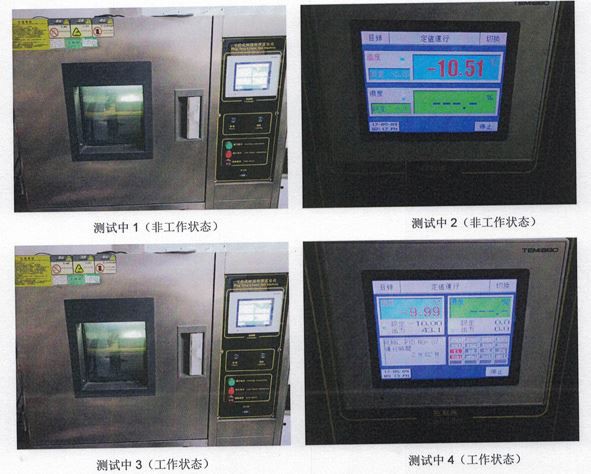
1.2. Low temperature working test
1.2.1 Test process
1. Place the test sample for 2h under normal test atmospheric conditions
2. Appendix 1 testing procedures are carried out,
3. The samples are not packaged for inspection. Put it in the test box in the state of no electricity and ready to work, then lower the temperature of the test box to -10℃ at a rate of no more than 3℃/min, keep it for 2h, then start the test sample to work, and work continuously for 1h. Perform intermediate testing according to GJBI50.1A-2009 Appendix 1 testing procedures.
4. The test sample should stop working, and the temperature change rate in the test box should not exceed 5℃/min, return to normal test atmospheric conditions, and keep it for 2h.
5. According to GJB150.1A-2009 Appendix 1 testing procedures
1.2.2. Test results
Sample after test
1. Power on: normal
2. Display: no flicker
3. Data storage: normal
4. Operating system: normal operation
1.2.3. Test photos
2. High temperature test
2.1. High temperature storage test
2.1.1 Test process:
1. Place the test sample for 2h under normal test atmospheric conditions.
2. Check the flat panel display of the industrial control integrated machine and work normally.
3. The test sample is placed in the test box (chamber) according to the requirements of 3.9.1 in GIB150.1A-2009, and then the temperature of the test box is raised to 65℃ at a rate of no more than 3℃/min, and kept for 2h .
4. The test sample should be in the test box (chamber), the temperature change rate should not exceed 3℃/min, and return to normal test atmospheric conditions quickly until the temperature of the structural stress safety monitoring system is stable
2.1.2 Test results
Sample after test:
1. Power on: normal
2. Display: no flicker
3. Data storage: normal
4. Operating system: normal operation
2.1.3. Test photos

2.2 High temperature work test
2.2.1 Test process
1. Place the test sample for 2h under normal test atmospheric conditions
2. Detect the flat panel display of the industrial control integrated machine and work normally
3. The test sample is placed in the test box (chamber) according to the requirements of paragraph 3.9.1 of GJB150.1A-2009, and then the temperature of the test box is raised to the highest working environment temperature of the test sample at a rate of no more than 3℃/min. 50℃, and keep it unchanged, keep it for 2h, then start the work, work for 1h, carry out the intermediate test according to the test procedure in Appendix 1.
4. The test sample stops working, and the temperature change in the test box (chamber) does not exceed 5℃/min, restore to normal atmospheric conditions, and keep it for 2h.
2.2.2 Test results:
Sample after test
1. Power on: normal
2. Display: no flicker
3. Data storage: normal
4. The operating system is running normally
2.2.3 Test photos:

The above test is our wide-temperature tablet test method. We will conduct a full range of tests on industrial tablet computers in the face of high and low temperatures. Only through the test can they be distributed to the market. All tablets that fail the test are eliminated.


