

The following case shows. A complete selection process: from understanding the needs of guests to searching parts through Digi-Key official website, we finally found the right electronic materials according to our suggestions.
The case is...
A guest is designing a double-sided notebook computer. He plans to use the eDP (Embedded DisplayPort) interface for the first set of panels, and the second group uses DP (DisplayPort) to convert LVDS (No EDID) panels with resolution 1920x720. Guests want Digi-Key to help with the selection.
Different video interfaces
LVDS ( Low voltage differential signal , Low-Voltage Differential Signaling) It is a signal transmission mode with data rate up to 2Gbps and widely used in LCD display interface. In addition to low voltage power compatibility, low noise and reliable signal transmission, it can also be integrated into the IC system. However, due to the limitation of speed and number of lines, driven by the demand for high-definition displays and high-speed data transmission in today's market, the DisplayPort (or HDMI) based transmission will be replaced. Noodles.
DisplayPort (DP) is the interface standard of VESA (VideoElectronics Standards Association, Video Electronic Standard Association), which is used to process high-speed and high-definition audio and video data transmission interface.DisplayPort1.4a, released in April 2018, is the latest information guide for specification requirements and component and system design. The DP1.4 Standard enables 4K2K@120Hz / 25.82Gbps to operate in 4- pipelines.
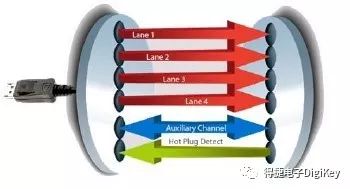
Figure 1, DisplayPort physical layer protocol concept map (source: TA0339, Technical Article of DisplayPort, STMicroelectronics )
EDP (EmbeddedDisplayPort) is a digital interface based on DisplayPort architecture and protocol. It is often used in notebook computers, tablet computers, monitors, etc. Compared with LVDS, the interface with eDP can have a higher running speed, and also reduce the number of lines in the interface and the number of pins in the interface. Refer to the comparison table below, under the high resolution (1368X768) or full HD (1920x1200) display resolution. EDP also has obvious advantages, which can greatly reduce the number of high-speed lines required for the display interface, thereby reducing the space occupied by the total system. Higher speed means higher resolution, color depth and frame rate. EDP also includes some unique functions, such as better management of system power supply, longer battery life and lower EMI/RFI impact, thereby reducing the volume requirements for shielding.
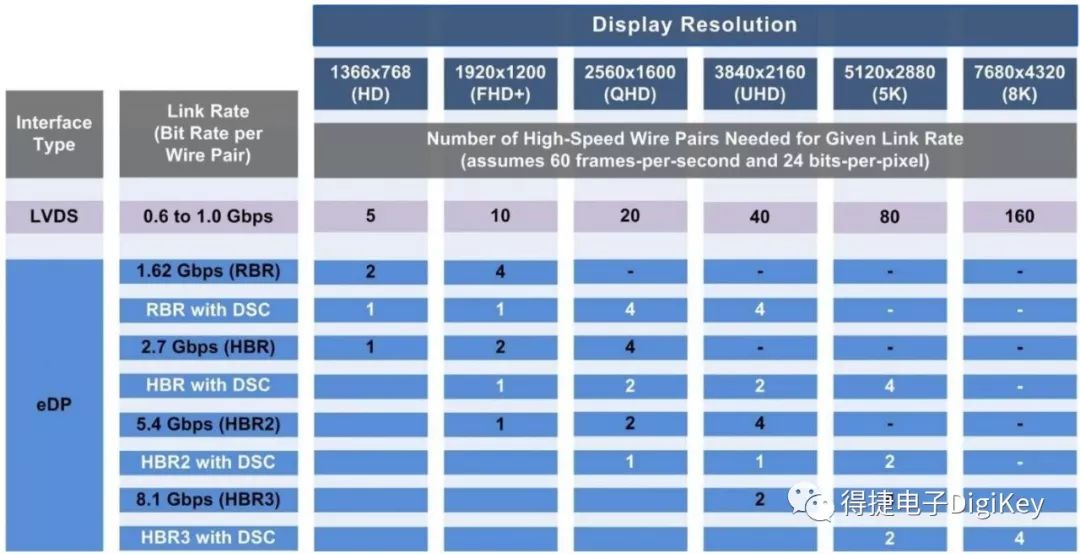
Figure 2, Comparison table of LVDS and eDP
Although today's TV and computer monitors on the market are developing toward flat screens with digital cable interfaces, while using HD multimedia interface cables for high-end connections, we also need to consider the need to connect PC from the traditional VGA (LVDS) cable to the lower end display devices, such as monitors. Figure 3 is the appearance of DisplayPort and DVI connector connector.
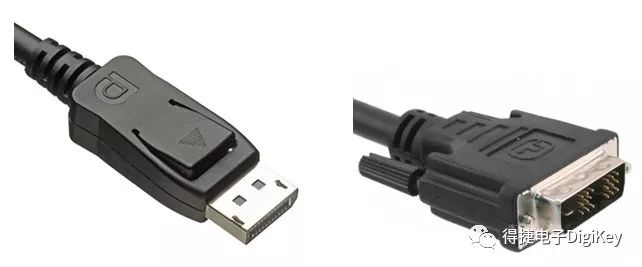
Figure 3, DisplayPort cable (left) and DVI-D cable (right)
In addition to using eDP to convert to LVDS, the use of digital video interface (DVI) to switch to VGA interface is also a consideration. The video part of DisplayPort is the same as that of DVI. They are compatible with digital signals, but the difference between DVI and DP interface connectors. Therefore, if you want to connect a laptop with DVI interface to a HD multimedia interface, you almost have to have a converter, for example. TrippLite Company P134-000-DVI-V2

Figure 4, P134-000-DVI-V2, TrippLite
Here are some DP conversion interface technologies and how to use the search function of Digi-Key official website in selecting materials.
Technical considerations for DP conversion to LVDS
When using DP (or eDP) to LVDS converter, we need to consider how to implement protocol transformation between DP source and LVDS display panel. When dealing with the incoming DisplayPort (DP) stream, perform DP to LVDS protocol conversion and send the processed stream in LVDS format, that is, the receiving port faces DP source (for example, CPU / GPU / chipset), while the sending port faces the LVDS receiver (for example, the panel controller of LVDS display).
Because LVDS In the protocol, data can be VESA or JEIDA Format completed "packaging" (packing) "In DP AUX Interface transmission only needs to be executed. I2C-over-AUX Command "and support, utilizationEDID-DDC Communication mode and LVDS Panel contact. If The support panel does not have EDID ROM, so engineers need to find devices that can simulate EDID ROM behavior, help them to connect, and avoid specific changes in system video BIOS. For example, below MegaChips company STDP40X0 Application diagram of series
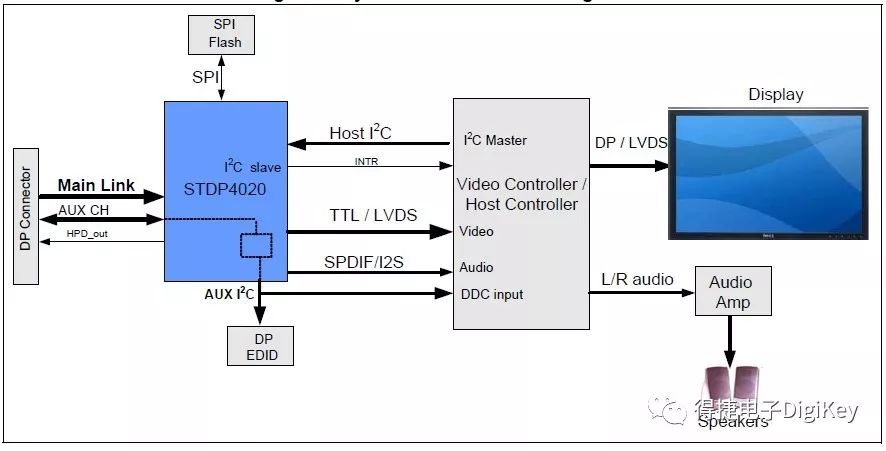
Fig. 5. interface block diagram of STDP40X0 series system of MegaChips company
Internet, quick picking according to parameters.
After understanding the requirements, engineers can visit the official website of Digi-Key, in the "IC" classification. Linear video processing In the detailed classification, the material selection operation is carried out. In the application screening program, the engineer can find "DisplayPort" in "application" or "DisplayPort" in the search results.

Figure 6.
epilogue
stay LVDS In the agreement, DisplayPort It is one of the supporting standards of transmission, but LVDS The panel must be supported. EDID 。 Do not containEDID In the case of both, a converter is needed to simulate it. EDID ROMBehavior, avoid LVDS In the panel BIOS change
In order to facilitate engineers to select materials, the "IC" classification of Digi-Key official website will be " Linear video processing"Subdivision" makes it easier for engineers to choose parts suitable for their applications faster.


