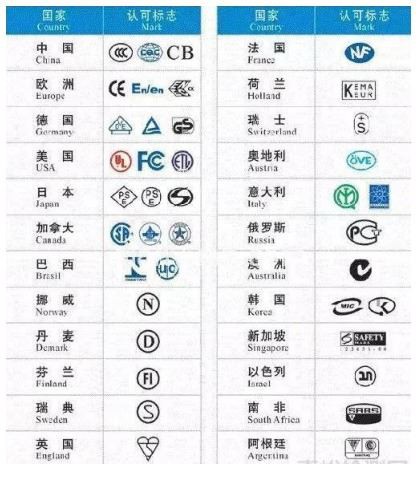
Industrial PCs in China generally have 3C certification, CE certification and CQC certification. The most basic is 3C certification, which is China's mandatory standards for electrical and electronic equipment. For industrial computer certification marks, each national standard is different. The editor will explain to you what other certifications of industrial computer have?
1. CE certification
Products that use CE certification are becoming more and more popular. If a product has a CE mark, it represents the requirements of a series of European directives such as product safety, hygiene, environmental protection and consumer protection. If the product can meet the relevant requirements, it can be affixed with the CE mark, but it does not meet the relevant requirements, the opposite is true. (I personally feel that CE is not a certification, but a self-declaration. Generally, this statement will be made when shipping to Europe)
2. CCC product certification
The so-called 3C certification, this certification was born on May 1, 2002, CCC is the abbreviation of English Chinacompulsorycertification, which means "China Compulsory Certification". If the product is listed in the "First Batch of Products Subject to Compulsory Product Certification" issued by the General Administration of Quality Supervision, Inspection and Quarantine of the State Administration of Quality Supervision, Inspection and Quarantine and the National Certification and Accreditation Administration Commission, mandatory testing and review of the product must be implemented. If it is a product listed in the catalog that has not been certified by a designated agency or has not been certified for labeling in accordance with the regulations, it cannot be sold, imported or shipped.
3. CQC certification
The China Quality Certification Center (CQC) can obtain the CQC certification, and the products affixed with the CQC certification mark are certified by the national certification body. The purpose of the certification is to be safe and meet the quality standards of the state.
4. CB certification
The CB system (IEC system for conformity testing and certification of electrical products) is an international system operated by IECEE. The certification bodies of each member country of IECEE test the safety performance of electrical products on the basis of IEC standards. The test results are the CB test report and CB test certificate is a system that is mutually recognized by the member states of IECEE. The purpose is to reduce international trade barriers due to the need to meet the certification or approval criteria of different countries.
5. PCT certification
"Products that want to enter the customs territory of the Russian Federation must obtain the National Standards Qualification Certificate (GOST Certificate) issued by the Russian National Standards and Metrology Commission." The law in Russia stipulates this. Therefore, to enter the Russian market, we must obtain this certification, but our China is very different. We only need to have the Russian PCT standard certification, which is equivalent to getting a pass to enter and exit Russia.
6. PSE certification
Japan’s DENTORL Law (Electrical Device and Material Control Law) stipulates that 498 products must pass safety certification to enter the Japanese market. Among them, 165 types of A products should obtain the diamond-shaped PSE mark, and 333 types of B products should obtain the round PSE mark.
7. TL certification
ETL is the abbreviation of American Electronic Testing Laboratories (ElectricalTestingLaboratories). The ETL laboratory was founded by American inventor Edison in 1896 and enjoys a high reputation in the United States and the world. Like UL and CSA, ETL can test and issue ETL certification marks according to UL standards or American national standards, and can also issue composite certification marks according to UL standards or American national standards and CSA standards or Canadian standards. The "us" in the lower right indicates that it is applicable to the United States, the "c" in the lower left indicates that it is applicable to Canada, and both "us" and "c" are applicable to both countries. Any electrical, mechanical and electromechanical products can be tested by EMC to test product performance. As long as the product has the CTL mark affixed, it means that the product has passed the ETL test and passed. Passing ETL means conforming to relevant industry standards.
8. EN certification
EN (European Standard): According to the common obligations of participating countries, the adoption of this EN standard will give legal status to the relevant national standards of a certain member country, or revoke the relevant standards of a certain country that is opposed to it. In other words, the national standards of the member states must be consistent with the EN standards.
9. TUV certification
TUVR-Heinland German Rheinland Technical Supervision Company, which is the largest certification body for product safety and quality in Germany, is a government-recognized testing agency. TUV and FCC certification, CE certification, CSA certification and UL certification are all at the same level and are authoritative. If you want to enter the German market, you must pass TUV certification.
10. CSA certification
The Canadian Standards Association is abbreviated as CSA, which means Canadian Standards Association. It was established in 1919, and all electronic appliances in the North American market must obtain CSA certification. The largest certification body in Canada is CSA, and it is also one of the most famous safety certification bodies in the world.
11. GS certification
GS means "GeprufteSicherheit" in German (safety has been certified), and it also means "GermanySafety" (German safety). GS certification is based on the German Product Safety Law (SGS) and is a voluntary certification for testing in accordance with the EU unified standard EN or German industrial standard DIN. It is a recognized German safety certification mark in the European market. With the GS certification mark, it means that it has safety and passed the test of an independent organization with credibility. It is different from CE, GS does not have legal requirements, but the safety awareness has been deeply rooted in the hearts of ordinary consumers. If there is a GS certification mark, and a GS certification mark, then the products with GS certification must be compared competitive.
12. UL certification
UL is the abbreviation of Underwriter Laboratories Inc, which means the Underwriters Laboratories of the United Kingdom. It was born in 1894, and the most authoritative laboratory in the United States belongs to UL. It is different from other organizations. It is an independent, non-profit, professional organization that conducts experiments for public safety. It adopts scientific testing methods to study and determine whether various materials, devices, products, equipment, buildings, etc. are harmful to life and property; to determine, compile and issue corresponding standards and help reduce and prevent damage to life and property. At the same time, it will carry out fact-finding research business. In short, it is mainly engaged in product safety certification and operating safety certification business. Its ultimate goal is to obtain products with a fairly safe standard for the market and contribute to the guarantee of personal health and property safety.
13. FCC certification
FCC certification introduction FCC (Federal Communications Commission, US Federal Communications Commission) was established by COMMUNICATIONACT in 1934 as an independent agency of the US government and directly responsible to Congress. Many radio application products, communication products, and digital products require FCC approval to enter the US market.